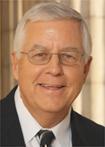
Turning the Tables on Tom Harkin

Union water-carrier Sen. Tom Harkin (D-AFL-CIO) held a hearing last week in the Senate to promote more forced unionism but the Republican minority turned tables on the Chairman.

Sen. Mike Enzi called one witness — Michael Luttig, the general counsel of Boeing who spoke at length about the NLRB’s war on freedom of choice and Right to Work.

Pajamas Media reported:

Luttig, the general emphasized that a union strike in 2008 in Washington shut down production of the 787, costing Boeing more than a billion dollars and “damaging Boeing’s reputation for reliability with its airline customers, suppliers, and investors.” Boeing took into account many different factors in making a major assembly investment decision, and the recurring strikes in Washington was just one of them.

This action by the pro-union NLRB is an abuse of the applicable law and precedent, and seems to be a political move made to placate the unions that will be crucial to the election efforts of Democrats next year, including President Obama. It is also an attack on right-to-work states like South Carolina.

The NLRB action has raised the ire of everyone from the governor and Representative Joe Wilson, to Senators Jim DeMint and Lamar Alexander. Luttig’s testimony made the NLRB the focus of the hearing, something that would otherwise not have happened because Harkin would never have called a hearing to specifically discuss this issue.

Harkin was clearly annoyed at the turn that the hearing took. He muttered about his coal mining father and the unfair attacks on unions and the NLRB. But the political danger of the NLRB action was demonstrated by Senator Richard Blumenthal (D-CT), who given his background in suing corporations, is not generally seen as “pro-business.”

Blumenthal went out of his way to be nice to Luttig and Boeing, the biggest American export company with $29 billion in overseas sales in 2009. That might also be due to the fact that Boeing suppliers spend more than a billion dollars in Connecticut.

Bailout!

Sen. Tom Harkin (D-Iowa), the author if the infamous Card Check Forced Unionism bill, is at it again.  Harkin has just authored Senate Bill 3206 — a massive $23 billion bailout for the teacher’s union.  The NEA has made the bill a top priority.  Kyle Olson does the math:

The National Education Association, the nation’s largest teachers union, and its counterpart, the American Federation of Teachers, are ramping up attention on Senate Bill 3206, introduced by Sen. Tom Harkin (D-Iowa), which would create a $23 billion “education jobs fund” to hire or retain “150,000 or more” school employees for the next school year.  The NEA is engaged in a “massive, 24/7 lobbying campaign” to pass Harkin’s bill, according to its president Dennis Van Roekel.

That’s $153,333 spent per job just to “retain” them.  The most recent data from the American Federation of Teachers concluded the average teacher salary is $51,009.  Where is the other $100,000 per job going?

Nevertheless, in a recent Senate committee hearing, Harkin cited the “emergency” for creating the fund.  Note he didn’t say teachers, he said “education jobs.”  That’s because in many states, like Michigan, teachers unions are losing members that are custodians or food service workers.

Just for the record, billions of dollars have already been spent on “retaining” school jobs.  The NEA claims 325,000 public school jobs were “saved” under the stimulus bill.

School Union Bailout

Sen. Tom Harkin (D-AFL-CIO) is proposing a $23 billion bailout to ensure full employment for the teacher union members.

IOU’s Called In — Payback Appointment

The Washington Times and the Wall Street Journal discuss the possibility of a recess appointment of Craig Becker to the National Labor Relations Board.  A recess appointment would bypass the will of the Senate and install a self-proclaimed forced unionism radical to the Board.  The Washington Times correctly opines:  

Mark Mix of the National Right to Work organization reports that in 2007 alone, Mr. Becker’s lawyering forced 63,000 California workers to pay union dues even after rejecting union membership. He allowed repeated “home visits” for union backers, designed to pressure workers to sign public union-organizing petitions. Unions were “formed to escape the evils of individualism and individual competition. … Their actions necessarily involve coercion,” Mr. Becker once explained.

This gets to the heart of the fears about this nomination. The administration so far has been unable to push through Congress the radical plan to force union organizing through “card check” mechanisms in which workers would be denied a secret ballot when voting on whether to unionize. The purpose, clearly, is to invite coercion and intimidation to increase the ranks of dues-paying members. Mr. Becker let slip his suggested solution to the congressional difficulty back in 1993, when he said the NLRB could impose card check, or something close to it, with “no alteration of the statutory framework.” Indeed, he openly called for “abandoning the union election.” (more…)