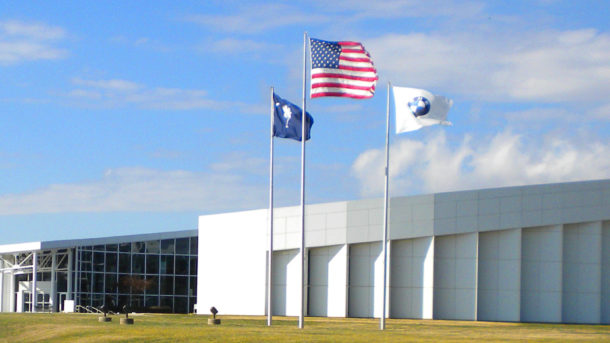
South Carolina Sen. Jim DeMint takes on the NLRB again his Human Events column:

Like so many federal programs, the National Labor Relations Board (NLRB) has expanded its mission far beyond its original purpose in order to wage ideological battles on the taxpayers’ dime.

The NLRB was never meant to micromanage where companies can locate or how many products they can manufacture, as the NLRB under the Obama administration is currently seeking to do. To stop it, Congress should exercise its power of the purse to return the board to its original mission.

The NLRB was originally established to oversee union elections and investigate violations of federal labor laws. These days it’s doing less of that than ever. In 1980, the NLRB conducted 8,531 union elections around the country, with a budget of $108 million. In 2009, it oversaw only 1,704 union elections, with a budget of $261 million.

Union membership has plummeted by more than 40% since the 1980s. The rapid collapse of organized labor in America’s private sector has reduced the need for union elections—and thus, the NLRB itself—by 80% over the last three decades. Yet its budget—adjusted for inflation—remains essentially unchanged.

Hence the board’s recent drift into freelance assaults on economic freedom: While 20% of its budget may be needed to perform its real job, the board seems to be misusing the other 80% for ideological mischief.

The current NLRB is expanding its mission far beyond the original intent. Consider what Craig Becker, an NLRB appointee who was rejected by the Senate and then recess-appointed by President Obama, has said. “Just as U.S. citizens cannot opt against having a congressman, workers should not be able to choose against having a union as theirmonopoly-bargaining agent.”

Not only has the NLRB launched an unprecedented attack on right-to-work states and job creators, it is now actively silencing nonunion workers in order to give unions a leg up in its legal case against The Boeing Company. This branch of the federal government, charged with protecting workers’ rights, is suing a company on behalf of workers who are not in danger of losing their jobs, while refusing to listen to the concerns of three workers whose jobs actually are threatened by the NLRB’s own actions.

And the NLRB is now suing two states, Arizona and South Dakota, in an effort to overturn democratically passed laws that protect a worker’s right to a secret ballot in those states. The NLRB is actually taking the stance that union bosses should be able to force workers to sign cards in public to join a union, a practice known as “card check,” instead of making the decision in private without fear of intimidation.

This is not enforcement—this is extremism. (more…)

Share

Right To Work = Jobs

BMW plans to expand in Right To Work state of South Carolina

As politicians are seeking jobs through stimulus programs, spending sprees, welfare, food stamp programs and bureaucratic mandates, many ignore the upshot enactment of a Right to Work law can have on job creation for fear of angering their big labor benefactors. But the evidence continues to compound that giving workers a choice in joining a union is not only a civil rights issue but an economic growth issue. The Washington Examiner gets it:

“Danaher’s closing,” said Rep. Richard Neal, D-Mass., lamenting the loss of a plant that had employed 330 people in his state. “Now those jobs are going to Arkansas and to Texas.”

It was April 2005. Neal was taking the opportunity during a House committee hearing on competition with China to complain instead about how Massachusetts was losing jobs to states with less-hostile business climates.

The Ways and Means Committee chairman in 2005, California Republican Bill Thomas, mildly rebuked Neal’s deviation from the topic, saying Massachusetts had shot itself in the foot with high taxes and compulsory union membership.

“At some point perhaps the good citizens of Massachusetts will pick up the drift,” Thomas said. (more…)

Share

The NLRB’s action against South Carolina Boeing employees is mystifying even to a former NLRB Board member appointed by pro-Big Labor President Bill Clinton.

Bill Gould, a Clinton Administration Board member is “mystified” by the NLRB’s actions. “The Boeing case is unprecedented,” he says. “I agree with much of what this board has done and is likely to do, but I don’t agree with what the general counsel has done in the Boeing case. The general counsel is trying to equate an employer’s concern with strikes that disrupt production and make it difficult to make deadlines—he’s trying to equate that with hostility toward trade unionism. I don’t think that makes sense.”

From the Slate post, Air Rage by David Weigel:

Bill Gould has some advice for the labor movement: Turn back. Turn back before it’s too late.

“The administration is acting like a bunch of thugs,” said Sen. Jim DeMint. “If this is checks and balances, God help our country,” said Gov. Nikki Haley. “This is nothing more than bullying by the labor unions. This is President Obama and Harry Reid carrying their water.”

Share

Turning the Tables on Tom Harkin

Union water-carrier Sen. Tom Harkin (D-AFL-CIO) held a hearing last week in the Senate to promote more forced unionism but the Republican minority turned tables on the Chairman.

Sen. Mike Enzi called one witness — Michael Luttig, the general counsel of Boeing who spoke at length about the NLRB’s war on freedom of choice and Right to Work.

Pajamas Media reported:

Luttig, the general emphasized that a union strike in 2008 in Washington shut down production of the 787, costing Boeing more than a billion dollars and “damaging Boeing’s reputation for reliability with its airline customers, suppliers, and investors.” Boeing took into account many different factors in making a major assembly investment decision, and the recurring strikes in Washington was just one of them.

This action by the pro-union NLRB is an abuse of the applicable law and precedent, and seems to be a political move made to placate the unions that will be crucial to the election efforts of Democrats next year, including President Obama. It is also an attack on right-to-work states like South Carolina.

The NLRB action has raised the ire of everyone from the governor and Representative Joe Wilson, to Senators Jim DeMint and Lamar Alexander. Luttig’s testimony made the NLRB the focus of the hearing, something that would otherwise not have happened because Harkin would never have called a hearing to specifically discuss this issue.

Harkin was clearly annoyed at the turn that the hearing took. He muttered about his coal mining father and the unfair attacks on unions and the NLRB. But the political danger of the NLRB action was demonstrated by Senator Richard Blumenthal (D-CT), who given his background in suing corporations, is not generally seen as “pro-business.”

Blumenthal went out of his way to be nice to Luttig and Boeing, the biggest American export company with $29 billion in overseas sales in 2009. That might also be due to the fact that Boeing suppliers spend more than a billion dollars in Connecticut.

Share

NLRB “Shameful”

The National Labor Relations Board attack on the Right to Work has been called “frivolous,” “shameful” and “ludicrous” by South Carolina lawmakers. “We absolutely will not allow them to bully our businesses or mess with our employees. As governor, I absolutely will not stand for it,” vowed Republican Gov. Nikki Haley at a news conference a short distance from where Boeing is building a second assembly line for its new 787 jetliners.

Right to Work champion U.S. Sen. Jim DeMint, R-South Carolina, said later he was amazed by the NLRB.”This means inside our own government is union thugs trying to bully and intimidate,” DeMint said. “The signal they’re trying to send to any company in America is if you move to a right-to-work state, they’re going to make it painful for you.”

Share

Murdock’s defense of “workers’ rights”

Excerpts from Scripps Howard News Service and Hoover Institution Fellow Deroy Murdock’s recent defense of “workers’ rights” (link to complete column):

Even as they scream for “workers’ rights,” the one workers’ right that union bosses despise is the Right To Work.  Big Labor and its overwhelmingly Democratic allies oppose a woman’s right to choose whether or not to join a union. Instead, they prefer that predominantly male employers and labor leaders make that choice for her.

The American Left has hoisted “choice” onto a pedestal taller than the Washington Monument. Liberals and their Big Labor buddies will race to their battle stations to defend a woman’s right to choose to abort her unborn child. Meanwhile, they holler themselves hoarse to prevent her (and her male counterparts) from freely choosing to accept or avoid union membership.

Sen. Jim DeMint introduced the National Right To Work Act this week.

Sen. Jim DeMint, R-S.C., understands that exercising this choice is a basic human right, and neither private employment nor government work should require joining or paying dues to a union.

“Many Americans already are struggling just to put food on the table,” DeMint said, “and they shouldn’t have to fear losing their jobs or face discrimination if they don’t want to join a union.” Thus, on Tuesday, DeMint introduced the National Right to Work Act.

Notwithstanding that right-to-work states are comparatively prosperous engines of job growth, the case for right-to-work is not merely economic but also moral. (more…)

Share

Worker Advocate Hails Introduction of National Right to Work Act

Right to Work President applauds legislation that would prevent union officials from extracting union dues from workers as a condition of employment

Washington, DC (March 8, 2011) – Responding to Senator Jim DeMint’s introduction of a National Right to Work Act, National Right to Work Committee and National Right to Work Legal Defense Foundation President Mark Mix issued the following statement:

“We’re extremely pleased that Senator DeMint has introduced a National Right to Work Act, intensifying a growing debate about labor law and worker freedom. This legislation would enshrine the common-sense principle – already enforced in 22 states – that no worker should be compelled to join or pay dues to a union just to get or keep a job.

“In an age of legislative overreach, this is one of the shortest bills ever introduced. A National Right to Work Act does not add a single word to federal law. It simply removes language in the National Labor Relations Act that gives union officials the power to extract dues from nonunion workers.

“The case for Right to Work has always rested on the principles of employee freedom, but passage of a National Right to Work law will also pay economic dividends. Studies demonstrate that Right to Work states enjoyed nearly seven percent private sector job growth over the past decade while their forced-unionism counterparts lost nearly three percent of their private sector jobs. On average, Right to Work states experienced over 20 percent GDP growth during the same period, compared to just seven percent growth for states without Right to Work protections. Moreover, citizens are increasingly voting with their feet and leaving non-Right to Work states in droves for their Right to Work neighbors

“The Right to Work principle is also popular with the public. Polls consistently show that 80 percent of Americans believe that no worker should be forced to join or pay dues to a union just to get or keep a job.

“A National Right to Work Act enshrines worker freedom while providing significant economic benefits. For Senator DeMint’s colleagues, who will now consider the legislation, my question is simple: What’s not to like?”

 ###

The National Right to Work Committee, established in 1955, is a nonprofit, nonpartisan, single-purpose citizens’ organization dedicated to the principle that all Americans must have the right to join a union if they choose to, but none should ever be forced to affiliate with a union in order to get or keep a job. Its web address is www.nrtwc.org.


Share