Forced-dues continue to fill the coffers of unions, as well as, union presidents’  and politicians’ pockets according to this recent study by the Commonwealth Foundation:

Government Unions and Forced Dues

  • Almost half of government workers in Pennsylvania are union members, compared to 9.3 percent in the private sector.
    • Pennsylvania is a forced union state, meaning that workers can be forced to join a union or pay a [so-called] “fair share fee” just to keep their job.  Most government units in Pennsylvania are “agency shops,” with a specified union to which workers must pay a fee.
    • When state and local governments automatically deduct dues and fair share fees from government workers’ paychecks—as is the practice in Pennsylvania—employees have little or no say in how their money is used.

Union Bosses

  • Union bosses collect hefty salaries derived from member dues and fair share fees. In most cases, the salaries are several times the average union member’s annual pay.
    • While acknowledging that budgets were tight, AFSCME Council 13 President David Fillman got a 6 percent raise in 2010, making his salary higher than Gov. Tom Corbett’s.
  • Dues and fees often go towards expensive conferences, outings and junkets.  For example, in 2009-10 the Pennsylvania State Education Association—the state’s largest public sector union—spent:
    • More than $250,000 on a board of directors retreat in Gettysburg.
    • More than $89,000 for a “political institution meeting” at the Radisson Penn Harris in Camp Hill, Pa.
    • $20,000 for advertising in the Pittsburgh Steelers Yearbook.
    • Almost $5,900 at Kimberton Golf Club and more than $5,100 at Concord Country Club in Chadd’s Ford.

Political Activity and Lobbying (more…)

Right to Work Getting Traction in Pennsylvania

Union Officials are mobilizing their paid army of lobbyists to oppose legislation that would prohibit making membership and payment of union dues or fees as a condition of employment in the Keystone State.  Pennsylvania would reap great rewards for enacting a Right to Work lawl as it would be the only state in the area with Right to Work protection. But the good of the people never comes ahead of the enrichment of the union bosses.

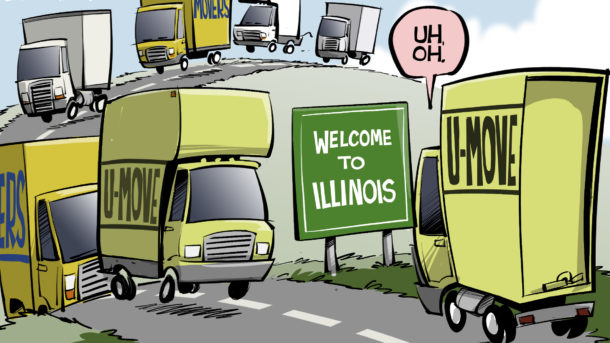
Matt Mayer of the Buckeye Institute debunks the long-term economic growth without Right To Work freedom is sustainable. Mayer uses a Columbus Dispatch reporter Joe Hatlett column that featured Former Michigan Gov. Jennifer Granholm to expose the fact that corporate welfare and reduced regulations ignore the “proverbial elephant in the room weighing down” compulsory union states like Indiana, Ohio, Illinois,, and Michigan.

From Matt Mayer’s post:

“With Michigan bleeding jobs and tax revenues, Granholm said she followed the corporate playbook in her attempt to close a huge state budget deficit and make Michigan more competitive. ‘In listening to the business community, I cut takes [sic] 99 times, and I ended shrinking government more than any state in the nation. In my two terms, I cut more by far than any state in the nation. And yet, we still have the highest unemployment rate.

There was no correlation.’ Granholm conceded that streamlining business regulations and lowering taxes — Kasich’s economic recovery mantra — are helpful, but they aren’t a panacea…[l]abor costs, help with start-up costs and proximity to markets are other factors.”

Hallett and Governor Granholm fail to mention why streamlining regulations and lowering taxes aren’t helping the northern states (located within 50 percent of the U.S. population and with low start-up costs) compete against the southern and western states. Instead, Hallett ignores the obvious answer and pleads for an end to corporate pork (with which we enthusiastically agree).

The reason Michigan and Ohio can’t compete is that the southern and western states already have fewer regulations and lower taxes, so “catching up” with those states still leaves the proverbial elephant in the room weighing down the northern states. Plus, those states are also pushing for lower taxes and fewer regulations, so the northern states are perpetually behind them. The elephant, which Governor Granholm does hint at, is labor costs, or, more specifically, unionized labor costs (see: General Motors and the United Auto Workers).

As I noted in Six Principles for Fixing Ohio, “Of course, tax and regulatory burdens also impact a state’s economy. Although many of the forced unionization states have heavy tax burdens and many of the worker freedom states have light tax burdens, some heavily taxed worker freedom states (Idaho, Nevada, and Utah) had the strongest sustained job growth from 1990 to today.

Similarly, a few moderately taxed forced unionization states still had weak job growth (Indiana, Illinois, and Missouri). The combination of both a heavy tax burden and forced unionization is deadly when it comes to job growth, as 11 of the 15 worst performing states are ranked in the top 20 for high tax burdens.” If Ohio and the other states from Missouri to Maine want to truly compete with Texas, Georgia, and South Carolina, then those states need to enact laws that protect the rights of workers not to join a labor union to get a job. (more…)

Fight for Workers in the Keystone State Has Begun

Pennsylvania State Rep. Daryl Metcalfe is re-introducing four measures to end mandatory union dues payments for the union bosses. “We want to bring that tyranny of the law to an end,” he said. (Video link)

From Laura Olson’s Post-Gazette report, Lawmaker pushes bill to end mandatory union dues:

Mr. Metcalfe said he believes the bills could become a priority if state taxpayers “demand from their elected officials responsible representation, and to end the time when the unions are just pushing big dollars into campaign war chests that are ultimately purchasing those votes that so many have given to protect the unions in this state.”

International Pours Money Into Sestak Political Ads and Ground Game

The Hill’s Sean Miller reports that an international Big Labor conglomerate,  Service Employees International Union (SEIU), says it will pour an additional $2 million into ads and ground forces to help Joe  Sestak against Pat Toomey in the Pennsylvania U.S.  Senate race.   Neither disclosure of SEIU sources of its funds (such as foreign & domestic forced-union fees) nor disclosure of SEIU personnel expenses were included in the report.

With a new poll showing Pennsylvania Democratic Rep. Joe Sestak edging in front in the Senate race, the Service Employees International Union (SEIU) announced it will spend $2 million to help him across the finish line.The SEIU cash will go to its get-out-the-vote effort in support of Sestak and Democrat Dan Onorato, who’s running for governor. The campaign includes a member outreach program and an independent expenditure (IE) effort, according to a release. It will focus on grassroots mobilization through canvassing, direct mail and phone banking.

“We’re out talking to voters every day about the importance of electing leaders like Dan Onorato and Joe Sestak who understand the needs and priorities of working families,” Gabe Morgan, SEIU Pennsylvania State Council president, said in a statement.

(h/t LaborUnionReport)

Will Voters Reject Big Labor Arlen?

In 2007, Senator Arlen Specter voted for the Card Check Forced Unionism bill when he was a Republican.  Then, in 2009, he helped block the Card Check Forced Unionism bill when he was a Republican.  In the first session of this congress, he announced he was going to oppose the Card Check bill as a Democrat.  Now as a Democrat running for reelection he has worked overtime to carry the union boss agenda in the Senate.  Now, this current posture is paying dividends as he racks up endorsements of big labor including the SEIU, the PA AFL-CIO, the Teamsters and other big labor unions.

But, it appears that rank and file voters may reject the insider deal as polls of Democrat voters now show a majority rejecting Specter.