Why the “Live Free or Die” state may continue to be mired in compulsory unionism according to the New Hampshire Watchdog’s Grant Bosse:

Right-to-work

Big Labor's Governor John Lynch endorses compulsory dues

The new dynamic has revealed itself most directly in the debate over right-to-work legislation. Having functionally taken over the Democratic Party, New Hampshire labor unions have drawn on a few Republican allies to try to sustain Gov. John Lynch’s veto.

Unions currently have monopoly bargaining power for all employees in unionized workplaces. They claim this burden justifies forcing union dues from unwilling workers. In fact, this monopoly prevents unions from having to compete at the bargaining table, driving wages and benefits higher.

Unions and their political allies think this is a good thing, while taxpayers end up paying more. Right-to-work would prevent workers from having to pay union dues as a condition on employment.

Share

Right to Work: Spider Senses Tingling

From the Foster’s Daily Democrat State Rep. Steve Vaillancourt makes the case for enacting Right to Work:

Until the last few weeks, right to work has always been a close call for me. In years past, I have opposed the bill after buying into the argument that one should not benefit from union contracts unless one pays the cost of negotiating them.

It was a close call because then as now, I believe the individual should control his or her own life without being coerced into joining anything. Thus, I have always seen a conflict of two principles and have to weigh their importance.

This year, with the Daniels amendment, the conflict was removed, and I voted for right to work. It remained a close call, l but the Daniels amendment tipped the scales to supporting the bill.

Even with the Daniels amendment gone, I continue to support the right to work bill, and guess what. It’s no longer a close call. I’m now a staunch supporter of the bill and urge all my Republican colleagues, especially those who like me have been on the fence in the past, to vote to override the governor’s veto.

Clearly, unions were using the payment for negotiation argument as nothing more than a red herring. How do I know this? Because, when they refused to budge in their total opposition to the bill, even when the Daniels amendment was added, my Spider senses startled tingling.

That’s a phrase I use to describe when I begin to realize that I’m being taken for a fool, that those trying to convince me are in fact being less than totally honest. (more…)

Share

If We Honor Liberty…..

Not many states honor liberty like New Hampshire. Their license plates boldly proclaim “Give me liberty or give me death.” To say that forced unionism runs counter to that philosophy is an obvious statement.  Senator Jim Forsythe makes that case in the Union Leader newspaper:

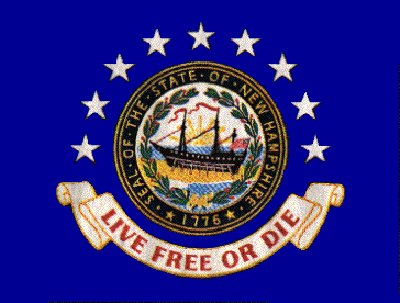
Most Granite State citizens take their freedom and liberty seriously, which shouldn’t be surprising since our state’s motto is “Live Free or Die.” Yet each and every month, tens of thousands of Granite State workers are forced to surrender a portion of their paychecks to a union just to have a job and feed their family.

And to add insult to injury, the unions turn around and use this forced-dues cash to bankroll causes and politicians that many of these workers who are forced to pay union dues would strongly disagree with. I should know, since the unions mailed negative campaign material against me since I was openly campaigning on passing right-to-work legislation.

This is antithetical to the idea of freedom. No American should be forced to pay dues to any private organization as a condition of employment. (more…)

Share

Compulsory Union Fee Supporters Delay NH Right To Work Vote

Word from New Hampshire is that the Compulsory Union Forces (Big Labor, NH Democrat Party, and Gov. John Lynch) have delayed the freedom from mandatory union fees, Right To Work, vote until next week.

Don’t let Big Labor Bosses continue to try to intimidate your elected officials. Pro-freedom Granite State citizens should contact their legislators now!

Share

NPR: New Hampshire On Cusp Of Approving Right-To-Work

From NPR’s Josh Rogers:

House Speaker William O’Brien says he’s convinced the needed two-thirds vote will happen.

“What drives state economic growth, first, is whether or not a state’s got an income tax. New Hampshire does pretty well with that. The second is whether a state’s got a right-to-work law,” said John Kalb, director of New England Citizens for Right to Work, at a statehouse news conference.

He was flanked by conservative and Tea Party activists. They worked hard during last year’s elections and are working hard now for a law that some say would have been almost unthinkable before Republicans’ big 2010 election gains. The GOP went from the minority to holding a 3-to-1 legislative fdge. But even with that margin, right-to-work backers admit the override is still touch and go.

“We’ve been calling our legislators nonstop, letting them know that this is why the voters put them in their position last November,” says Kevin Smith, who leads the conservative group Cornerstone Action.


Sign-up for NRTWC’s Free Once-a-Day e-mailed update summaries

Share

Right to Work in New England

Once again, the Wall Street Journal makes an eloquent case in support of the Right to Work — this time imploring legislators in New Hampshire to override a veto to become the first Right to Work state in New England:

Twenty-two states have right-to-work laws, most of them in the faster-growing South and West. The big news is that New Hampshire is edging closer to becoming the 23rd, which would make it the first new right-to-work state since Oklahoma in 2001 and could lead to a regional revolution.

The state House and Senate in Concord have passed a right-to-work statute, but Governor John Lynch, a Democrat, vetoed the bill. On May 25 the legislature will attempt to override that veto, and House Speaker Bill O’Brien says he is “cautiously optimistic” that he can gain the two-thirds majority to do so.

This would be a landmark victory for the right-to-work movement. All other Northeastern states operate under forced-union rules, so the Granite State would gain a decisive competitive advantage over its neighbors in attracting investment and jobs. “Passing right to work on top of not having an income tax could make us the Hong Kong of the region,” Mr. O’Brien says. The precedent would put enormous pressure on Maine and Massachusetts to follow. We assume Vermont is hopeless and prefers to be a tourist and natural history museum.

Right-to-work laws don’t outlaw unions. They simply allow each individual worker to decide whether or not to join the union. In compulsory-union states, workers employed in unionized workplaces are required to have union dues withheld from their paychecks as a condition of employment, so there’s big money at stake here for unions. (more…)

Share

Lynch vetoes bill that would guarantee that no worker could be forced to join or pay dues to a union to get or keep a job

Washington, D.C. (May 11, 2011) – In response to New Hampshire Governor John Lynch’s veto of the New Hampshire Right to Work Bill (H.B. 474), National Right to Work Committee President Mark Mix released the following statement:

“In a state that prides itself for its independence and love for liberty, Governor Lynch’s veto of the New Hampshire Right to Work Bill is unconscionable.

“Governor Lynch has turned his back to the tens of thousands of New Hampshire workers who are forced to pay tribute to union bosses just to get or keep their jobs, as well as the nearly 80 percent of New Hampshire citizens who support the Right to Work principle.

“Forcing workers to pay for the privilege to provide for their families is wrong, and while a Right to Work law in New Hampshire would guarantee individual worker freedom, it would also boost the state’s economy.

“Over the last decade, the average Right to Work state outpaces New Hampshire in real personal income growth and private-sector job creation. According to PHH Fantus, America’s longtime leading relocation firm, half of all companies considering a relocation or expansion automatically rule out states like New Hampshire that don’t have Right to Work laws.

“Forced unionism also hurts young workers the most, with millions of young adults and their children ‘voting with their feet’ by moving to Right to Work states. In fact, New Hampshire’s population of 25-34 year-olds shrunk by over 15 percent from 1999 to 2009, while the young adult populations in Right to Work states collectively increased 20 percent.

“I urge the New Hampshire General Court to override Governor Lynch’s veto and protect the freedom of every worker in New Hampshire.”

###

Contact: Patrick Semmens (703) 325-7892

For Release:  May 11, 2011


The National Right to Work Committee, established in 1955, is a nonprofit, nonpartisan, single-purpose citizens’ organization dedicated to the principle that all Americans must have the right to join a union if they choose to, but none should ever be forced to affiliate with a union in order to get or keep a job. It’s web address is www.nrtwc.org.
Share