SEIU Walking Around Money Fuels ObamaCare Supreme Court Rally

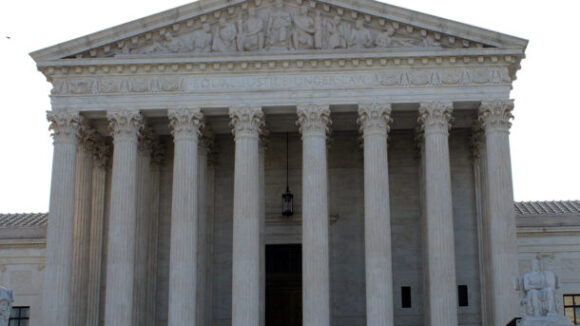
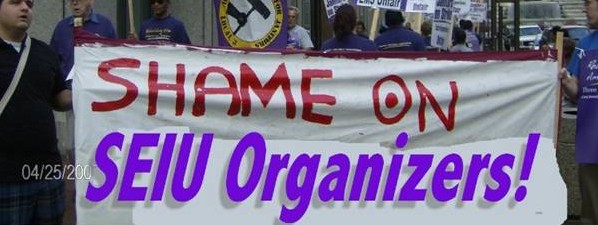
It’s a coin operated world when SEIU militants use forced-union-dues handed out in brown envelopes to pay protesters in front of the U.S. Supreme Court. The Daily Caller has the evidence:


Share

Walker Recall Update

We are all following Big Labor’s unprecedented attempt to buy a new governor and senate in Wisconsin.  Gov. Scott Walker believe the union bosses will unload $70 to $80 million on the state before election day.  While union militants claim the issue is about collective bargaining, Walker knows better:

The real problem for them, Walker argues, is the new ability of public employees to opt out of paying dues. “If workers keep their own money, they’re not giving it to the union,” Walker says. “They’re spending it on their health insurance or pension contribution.” Consider: A month after Walker’s budget went into effect, the largest union in the state, the Wisconsin Education Association Council, laid off 42 employees, or about 40 percent of its staff.

Share

Right to Work Advances in Minnesota

After a nearly four-hour debate, in a committee room ringed by chanting union members, a Senate committee voted 7-6 to refer the Right to Work constitutional amendment to its next stop at the Senate Rules Committee.  Needless to say, the union bosses are not pleased.


Share

Even in Michigan, Big Labor feels pushback

Michigan dials back Big Labor arrogance and power — at least slightly — the legislature passed a bill to prohibit public schools from automatically collecting union dues from the paychecks of teachers and other employees. Republican Representative Joe Haveman says the bill’s intent is to focus schools on educating children. The change will allow public school teachers and other employees to choose how they will directly pay their union dues and forced fees.

“The focus of our school administration has to be on teaching the kids. Let’s get out of the business of collecting bills for other people,” says Haveman. The bill is headed to Governor Rick Snyder’s desk for his signature.


Share

It’s a Civil Right to Join or Not Join a Union without coercion

The latest poll driven rhetoric from the union bosses is the claim that union compulsion should be a civil right under color of law.  Anthony Davies, a professor at Duquesne University looks behind the rhetoric noting that the problem with Big Labor’s proposed law because it makes compulsory unionism a ‘right’ for Big Labor while taking away from employees’ freedom to not join or be compelled to pay tribute to a union boss.

A recent op-ed in The New York Times called for new labor laws that will ensure that workers have the right to organize labor unions. These laws already exist, so what are unions griping about?

It’s not that workers are being prevented from unionizing. The problem, as unions see it, is that it is too difficult to force workers to unionize. Free workers have weighed the costs and benefits of today’s unions and most have freely chosen to do without them. It is this free will that unions — and their advocates on the country’s op-ed pages — seek to quash.

Union membership in the private sector has fallen to 7% not because unions have failed, but because they have done so well that — at least for the present — they are no longer needed. The exploitation of employees by their employers is a thing of the past; in fact, nowadays it seems like we’re more likely to hear about union bosses exploiting union members than about employers exploiting employees. Today, no matter how much labor leaders and their advocates pretend otherwise, labor reform means reforming unions. (more…)

Share

National Right To Work Foundation Attorneys’ are prepared for Big Labor Bosses and their legal shenanigans.  Hoosiers David Bercot, a certified wastewater operator for ITR Concession Company which services Indiana toll road rest stops in the Fort Wayne-area; Joel Tibbetts, a Minteq International assistant manager in Valparaiso; Douglas Richards, an employee with Goshen-based Cequent Towing Products; and Larry Getts, a Dana Holding Corporation tube press technician in Albion are standing up for their Right To Work.  From the Foundations release:

Workers File Brief Opposing Union Boss Challenge to Indiana Right to Work Law

National Right to Work Legal Defense Foundation staff attorneys provide free legal aid to workers defending law that ends union boss forced dues powers

Hammond, IN (March 2, 2012) – In response to union bosses’ federal lawsuit against Indiana’s popular Right to Work law, a group of Indiana workers from across the state are filing an amicus brief in support of their newly-enacted Right to Work freedoms.

With free legal assistance from the National Right to Work Foundation, the four workers – David Bercot, a certified wastewater operator for ITR Concession Company which services Indiana toll road rest stops in the Fort Wayne-area; Joel Tibbetts, a Minteq International assistant manager in Valparaiso; Douglas Richards, an employee with Goshen-based Cequent Towing Products; and Larry Getts, a Dana Holding Corporation tube press technician in Albion – all joined in the brief defending the law.

Union officials publicly floated the idea of challenging Indiana’s Right to Work law before it was enacted. International Union of Operating Engineers (IUOE) Local 150 headquartered in suburban Chicago, Illinois filed a federal lawsuit late last month challenging the law and requesting an injunction against its implementation.

Both Bercot’s and Tibbetts’s workplaces are unionized by the IUOE Local 150 union hierarchy. Both workers have refrained from union membership but are still forced to accept IUOE Local 150 union officials’ so-called “representation” and were required to pay dues to the union as a condition of employment before Indiana’s Right to Work law was enacted. (more…)

Share

Heritage to Chrysler: Support Right To Work to Help Michigan

From the Heritage Foundation an endorsement of Right To Work Freedoms for Michigan:

Did you know that there are no Volkswagen manufacturing plants in the Detroit area? Or Mercedes-Benz? Or Kia? Or Hyundai? Or BMW, for that matter?

Apart from having their cars assembled in Michigan, it turns out that those three companies have something else in common: the United Auto Workers union (UAW). It also turns out that every other car manufacturer has something in common, too: not wanting the UAW to do to them what it did to the Big Three.

Today, President Obama will address the UAW, and he should receive a rousing welcome. After all, his terms of the auto bailout richly rewarded his union allies at the expense of non-union employees and private investors, giving them, among other prizes, a very large stake of ownership in Chrysler. And together, they stand adamantly opposed to “right-to-work” laws that would empower the nation’s unemployed to find economic security with a non-union job.

They claim they want to protect “the American auto industry,” but this is not about “American cars.” The controlling interest of Chrysler is Italy-based Fiat and previously was Germany’s Daimler-Benz between 1997 and 2008. This is simply about protecting union fortunes.

Chrysler can hire actors in Louisiana to play the part of Detroit workers, and it can produce cinematically brilliant television ads. But wouldn’t Detroiters have more pride in a job than a commercial? Chrysler and the UAW must drop its opposition to Michigan’s right-to-work legislation if it wants to pretend it cares.

Right-to-work legislation protects employees from being fired for not paying union dues. Without that protection, workers are forced to support a union financially even if they’d rather spend their hard earned dollars at home, if the union contract harms them, or if they’re opposed to the union’s agenda. And if they don’t, they lose their jobs. Obviously, when given the freedom of choice, many workers choose not to unionize. (more…)

Share

Special Legal Notice to Private-Sector Workers in Indiana

The National Right To Work Legal Defense Foundation released  a special advisory for Indiana workers.

Click here to go to the Foundation’s post:  Special Legal Notice to Most Private-Sector Workers in Indiana


Share